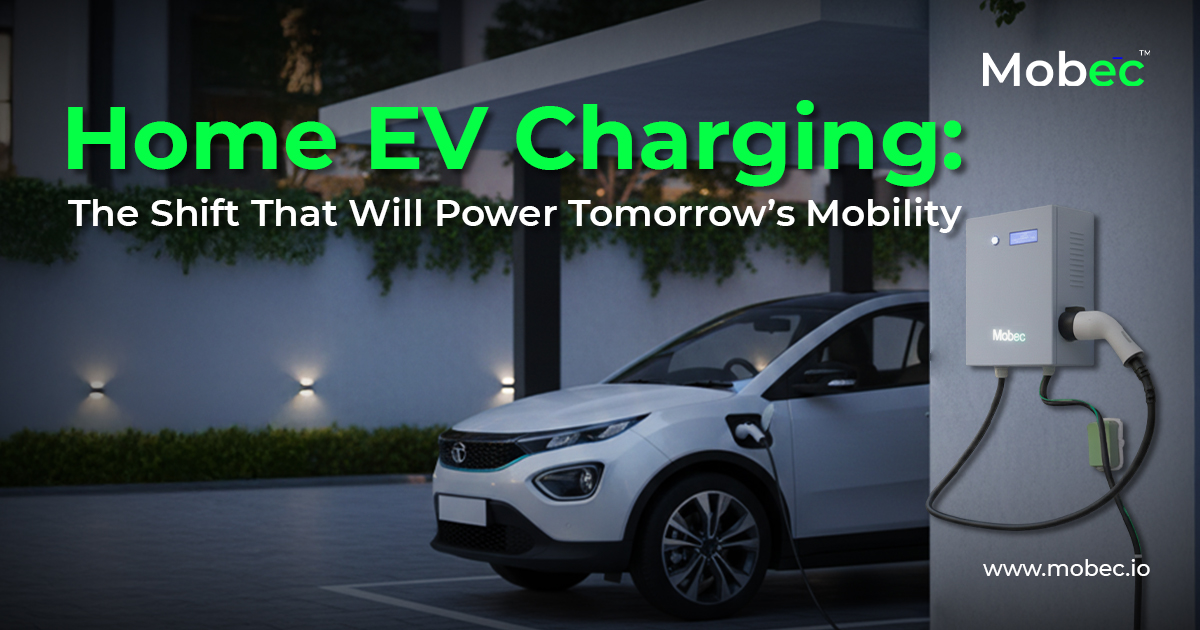
Electric vehicles are no longer a niche choice, they are becoming a lifestyle decision. As India accelerates toward cleaner mobility, one truth is becoming increasingly clear: the future of EV adoption depends on where and how we charge.
Public charging networks are growing, but the real transformation is happening closer to home, in residential parking spaces, office basements, fleet yards, and everyday destinations. Home and destination charging are fast emerging as the backbone of India’s EV ecosystem.
Yet, despite the momentum, several misconceptions around home EV charging continue to slow adoption. This is where Mobec steps in, by simplifying charging, correcting myths, and delivering reliable solutions like the MOBEC EV11.
Let’s break down some of the most common myths, and how Mobec is changing the narrative.
Myth 1: Home EV charging is too slow to be practical
One of the biggest misunderstandings about home EV charging is that it takes “forever.” In reality, charging speed depends on the type of charger being used.
Basic chargers may take longer, but modern AC EV chargers are designed for efficient overnight and workplace charging. With an 11 kW AC output (configurable up to 22 kW), solutions like the MOBEC EV11 can comfortably charge an EV while you sleep, work, or go about your day.
Mobec focuses on practical charging speeds, not excessive power that strains infrastructure, but reliable performance that fits real daily routines.
Myth 2: Home EV chargers are unsafe
Safety concerns are common, especially when electricity and vehicles come together. The truth is, certified EV chargers are built with multiple safety layers.
Mobec designs its charging systems with global standards and safety-first engineering. The MOBEC EV11 includes:
- Built-in safety mechanisms
- An emergency stop button for immediate shutdown
- IP54 protection, making it resistant to dust and water splashes
Home EV charging isn’t unsafe, poorly designed infrastructure is. Mobec ensures that safety is built in, not added later.
Myth 3: Home EV charging doesn’t work for shared spaces
Many believe home EV charging only works for individual houses. But India’s reality includes apartments, offices, hotels, and shared parking spaces. Many believe home EV charging only works for individual houses.
Mobec addresses this with RFID-based authentication, allowing controlled access in shared environments. Whether it’s a residential society, commercial building, or fleet depot, only authorized users can initiate charging.
This makes the MOBEC EV11 ideal for shared and semi-public installations, not just private garages.
Myth 4: EV chargers are difficult to monitor and manage
Another common concern is the lack of visibility, people assume once a charger is installed, it can’t be monitored or controlled.
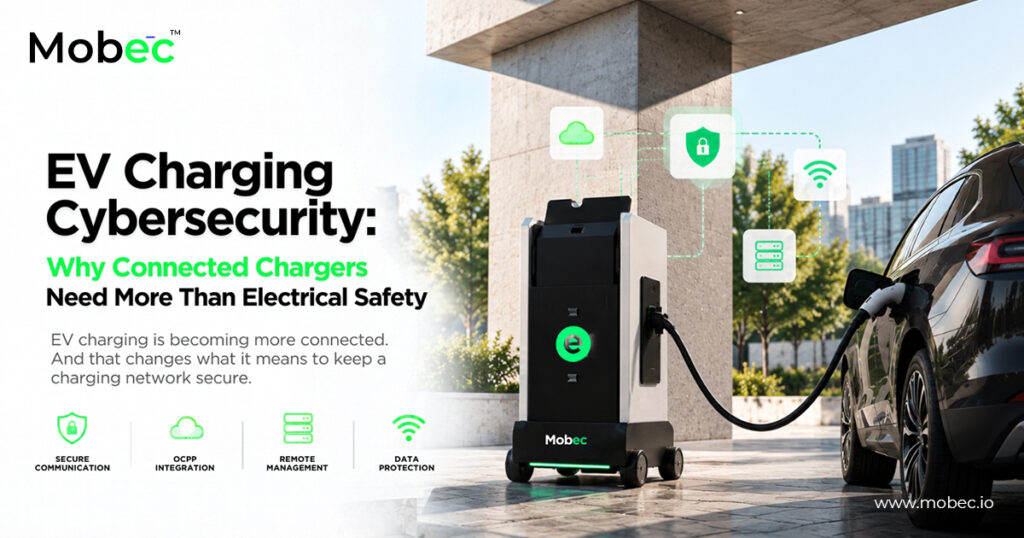
Mobec integrates smart connectivity into its chargers. The OCPP 1.6 compatibility of MOBEC EV11 allows operators to:
- Monitor charging sessions remotely
- Track usage data
- Integrate with EV charging management platforms
Combined with a 20×4 LCD display, both users and operators stay informed, on-site and remotely.
Myth 5: One charger won’t work for different EVs
With multiple EV models on the road, compatibility anxiety is real. The MOBEC EV11 supports Type 2 connectors (IEC 62196-2), the most widely adopted standard for AC EV charging.
This ensures compatibility across most electric vehicles in India, making the charger a future-ready investment rather than a short-term fix.
How Mobec Is Redefining Home EV Charging
Mobec doesn’t treat EV charging as a standalone product, it sees it as an ecosystem. From design to deployment, the focus is on scalability, reliability, and simplicity.
The MOBEC EV11 reflects this approach:
- 11 kW output, configurable up to 22 kW
- Wall-mounted, compact design for space efficiency
- RFID authentication for controlled access
- OCPP 1.6 compliant for smart network integration
- Type 2 single-gun configuration
- Designed for residential, commercial, fleet, and public parking applications
Instead of asking users to adapt to technology, Mobec builds technology that adapts to real-world environments.
Why Home EV Charging Is the Real Shift of Tomorrow
As EV adoption scales, convenience will matter as much as sustainability. Home and destination charging reduce dependency on public stations, lower range anxiety, and encourage daily EV usage.
By enabling reliable charging where vehicles are already parked, Mobec is helping shape a future where EV ownership feels effortless, not complicated.
The shift to electric mobility doesn’t start on highways, it starts at home.
Final Thoughts
Myths around home EV charging often come from outdated assumptions. With smart, safe, and scalable solutions, Mobec is actively removing barriers to EV adoption.
The future of mobility is electric, and home EV charging is the foundation that will power it forward.