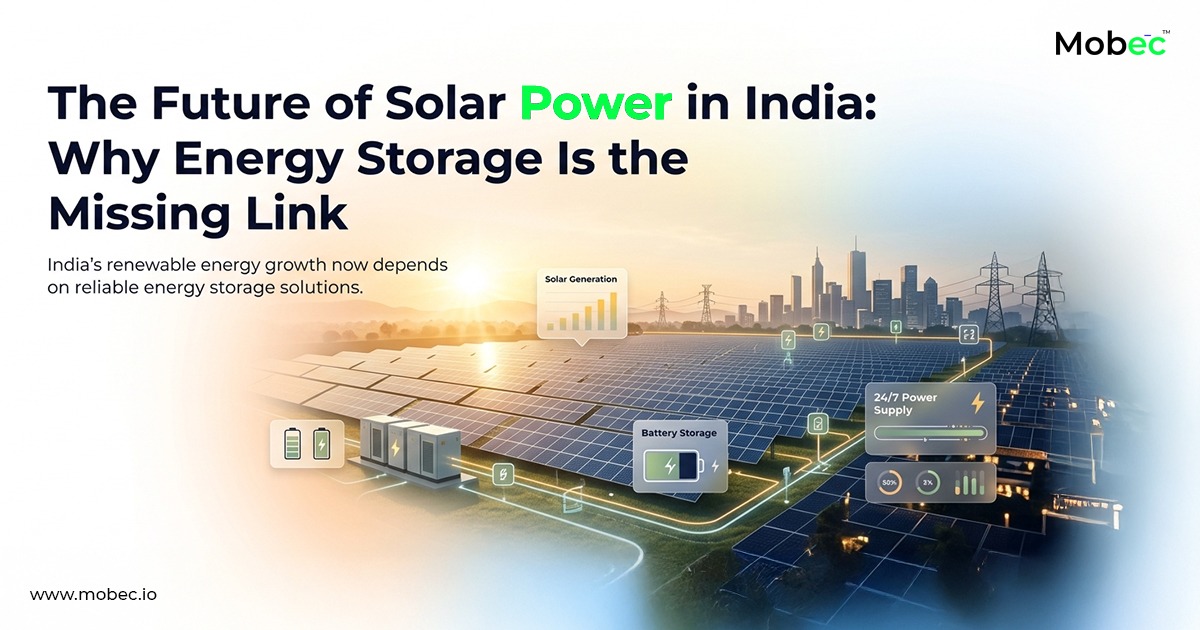
India is rapidly scaling its solar power capacity, with large-scale renewable projects adding significant clean power to the national grid. From utility-scale installations to rooftop solar adoption, the country is moving fast toward a greener energy future.
However, there is a critical gap that often gets overlooked. While solar energy generation is growing, it is still dependent on one key factor, sunlight. This means power production is limited to daytime hours, while electricity demand continues well into the evening and night.
As a result, even with strong solar expansion, India continues to face a challenge in ensuring consistent, reliable, and uninterrupted electricity supply. The issue is not just about generating more renewable energy, but about making that energy available when it is actually needed.
This is where the conversation around energy storage becomes essential.
Why Solar Power Alone Has Limitations
Solar energy depends on sunlight, which creates a natural imbalance between generation and consumption.
Key challenges include:
- Solar generation is limited to daytime hours
- Electricity demand often peaks in the evening and night
- Excess solar energy generated during the day is not always stored or utilized
According to global energy studies, renewable energy without storage can lead to ~20% potential energy wastage, depending on grid infrastructure and demand patterns.
This means that even as India increases solar installations, a large portion of clean energy may remain underutilized without proper storage systems.
Why Energy Storage Systems (ESS) Are Essential
Energy Storage Systems solve this gap by storing excess solar energy and supplying it when required.
In the Indian context, ESS plays a critical role in:
- Managing peak electricity demand
- Reducing dependency on diesel backup generators
- Improving grid stability in high-demand regions
- Increasing efficiency of solar investments
- Supporting rural and semi-urban electrification reliability
With India targeting 500 GW of non-fossil fuel capacity by 2030, energy storage is becoming an increasingly important part of the renewable energy ecosystem.
Solar + Storage: The Real Energy Transition Model
The combination of solar power and storage is now being recognized as the most reliable renewable energy model.
Instead of using solar power only when it is generated, ESS allows energy to be:
- Stored during peak sunlight hours
- Used during night or low-generation periods
- Distributed more efficiently across homes and businesses
This is especially important in states like Rajasthan, Gujarat, and Punjab, where solar potential is high but demand patterns vary significantly across regions.
Mobec Homez ESS and the Shift Toward Reliable Energy
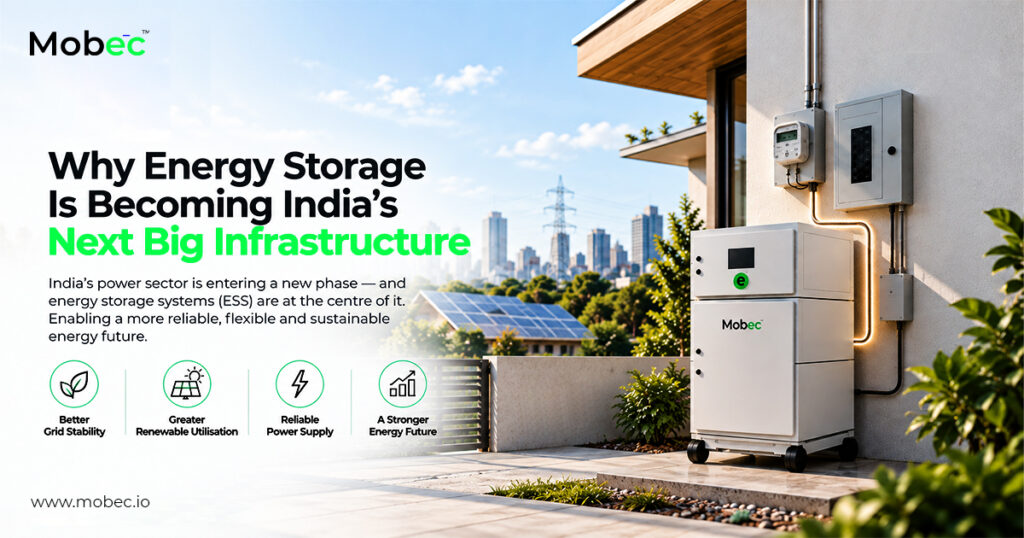
To address these challenges, energy storage solutions like Mobec Homez ESS are designed to make renewable energy practical and usable in real-world conditions.
Mobec Homez ESS – Key Capabilities
- Scalable capacity options for different energy requirements
- 29 kWh storage capacity with 8 kW output for high-load applications
- Supports residential, commercial, and institutional energy needs
- 10 ms automatic switchover for uninterrupted power supply
- Compatible with solar, grid, and off-grid systems
- Built-in safety systems with rugged IP54-rated design
These features make it suitable for:
- Residential homes requiring backup power
- Commercial spaces with high electricity dependency
- Remote locations with limited grid access
- Areas facing frequent power fluctuations
Growing Demand for Energy Storage in India
India’s energy consumption is expected to grow significantly over the next decade. According to the Central Electricity Authority (CEA), peak electricity demand could reach nearly 300 GW by 2030.
At the same time, renewable energy sources like solar and wind are intermittent. This mismatch is increasing the need for reliable energy storage systems in India.
Key drivers include:
- Rising solar adoption in urban and rural areas
- Increasing power outages in certain regions
- Growth of commercial and industrial energy demand
- Government focus on renewable integration policies
As a result, the solar energy storage market in India is expected to grow rapidly over the coming years.
Conclusion
India’s solar expansion is a major step toward clean energy, but generation alone is not enough. Without storage, renewable energy cannot fully meet real-world demand patterns.
Energy Storage Systems are the missing link that make solar power reliable, efficient, and usable 24/7.
This is where Mobec and its energy storage solutions play an important role in enabling a more stable and flexible energy ecosystem. By bridging the gap between energy generation and usage, such systems support the shift toward uninterrupted clean power for homes, businesses, and infrastructure.
The future of energy in India is not just solar. It is solar with storage, enabling a more reliable and resilient power system.