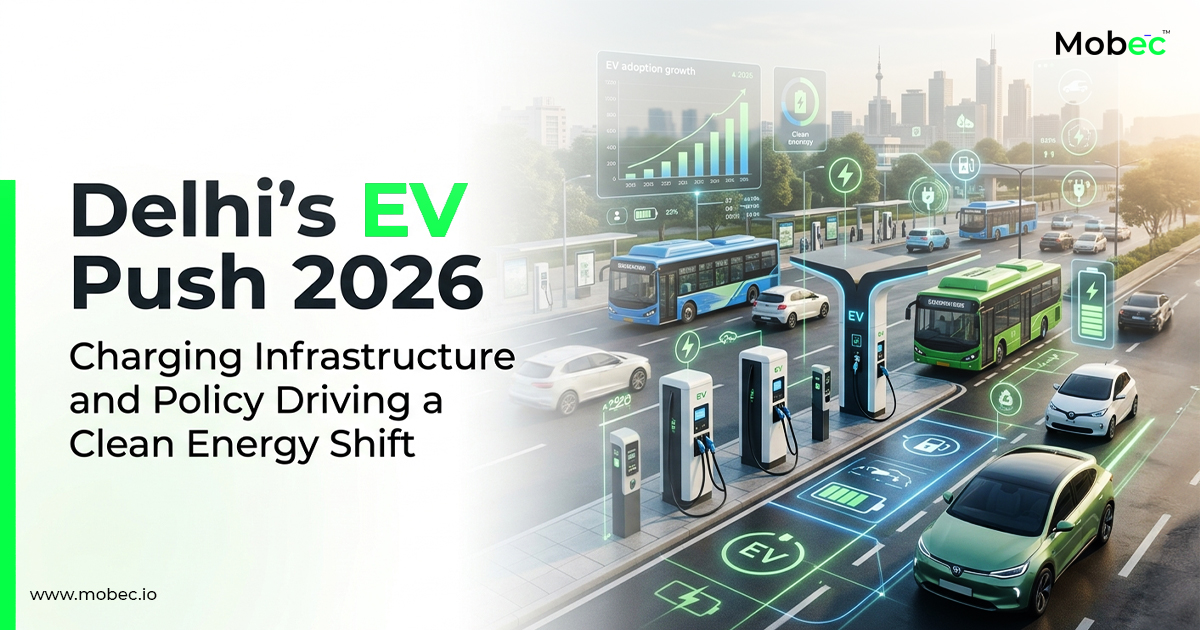
Delhi is moving quickly from talking about electric vehicles to actually building them into everyday transport. In 2026, the city’s EV push is clearly focused on scale – more electric buses on the road, more charging points across public spaces, and clearer policies that support long-term adoption.
With rising pollution and traffic pressure, electric mobility is no longer optional for the capital. Recent steps taken by the government show a practical approach: strengthening public transport, supporting charging infrastructure, and encouraging cleaner energy use. These changes are shaping Delhi into one of India’s most active and prepared EV markets.
For businesses, fleet operators, and EV solution providers, Delhi’s growing EV ecosystem is opening up real opportunities – driven not by promises, but by steady action on the ground.
Delhi Takes the Lead in Electric Buses
On February 8, 2026, Chief Minister Rekha Gupta flagged off 500 new electric buses, pushing the Delhi Transport Corporation’s (DTC) electric bus fleet beyond 4,000 vehicles. With this achievement, Delhi became the largest electric bus operator in India, reinforcing its leadership in green public transport.
To support this expansion, the Delhi government approved a ₹1,200 crore grant for DTC, aimed at strengthening operational stability and future readiness. The funding covers employee welfare while also enabling investment in transport modernisation and EV infrastructure.
Looking ahead, the government has set clear targets:
- 7,500 electric buses by the end of 2026
- 14,000 total buses by 2028
This scale of electrification plays a crucial role in lowering emissions, improving air quality, and enhancing the reliability of daily commuting across the city.
Scaling Up EV Charging Infrastructure Across Delhi
A strong charging network is what makes electric mobility work in the real world, and Delhi is putting serious focus on getting this right. In 2026, the city plans to add nearly 7,000 new EV charging points along with 100 battery swapping stations to support the growing number of electric vehicles on its roads.
At present, Delhi has close to 8,800 public charging points, but demand is rising much faster. Estimates suggest the city will need over 36,000 chargers in the coming years. To close this gap, charging stations are being installed in phases across 2026, pushing the total count beyond 16,000 chargers by the end of the year.
Most of these new chargers are being placed in busy public areas and transport zones, making daily charging easier and more accessible. This expansion plays a key role in reducing range anxiety and gives commuters more confidence to switch to electric two-wheelers, cars, and commercial EVs across Delhi NCR.
Strengthening Charging for Public and Commercial Fleets
Alongside public charging stations, the Delhi Transport Corporation is strengthening its charging setup for electric buses and heavy commercial vehicles. The focus is on high-power DC fast-charging systems that allow large fleets to charge faster and operate more efficiently.
These charging units are supported by advanced power substations, fast-charging technology, and digital monitoring systems, helping reduce downtime and improve daily operations. Faster charging means buses can return to service quickly, keeping public transport running smoothly.
By expanding charging capacity at the same pace as its electric bus rollout, DTC is taking a practical step toward fully electric public transport, ensuring reliability as the fleet continues to grow.
EV Policy 2.0: Incentives Fueling Adoption
The upcoming Delhi EV Policy 2.0, expected to be notified by March 2026, aligns with the central PM E-DRIVE mission and sets the roadmap for EV adoption through 2030.
Key incentives include:
- Up to ₹36,000 subsidy for women buyers of electric two-wheelers
- Up to ₹30,000 incentive for general buyers
- ₹10,000 scrappage benefit for replacing older ICE vehicles
- Gradual phase-out of fossil-fuel-based waste vehicles and buses
These measures aim to make EV ownership more affordable while accelerating Delhi’s shift toward clean energy fuels.
What This Means for Delhi Residents
For everyday commuters, Delhi’s growing EV ecosystem is already making a visible difference. Cleaner air, quieter streets, and more dependable electric bus services are slowly becoming part of daily city life. For EV owners, lower running and maintenance costs add to the appeal of making the switch.
The addition of battery swapping stations is especially helpful for two-wheelers, which form a large part of Delhi’s daily traffic. Quick swaps make short city trips easier and reduce waiting time for charging.
Delhi has already emerged as one of India’s leading EV markets, ranking third nationwide with over 83,000 registered EVs in 2024–25. With infrastructure expanding and policies in place, adoption is set to rise even further in the months ahead.
Mobec’s Role in Supporting Delhi’s Clean Energy Mission
As Delhi moves toward becoming a model EV city by 2030, industry-led innovation is essential. Mobec Innovations supports this transition by enabling reliable EV infrastructure and promoting sustainable battery practices that align with the city’s clean energy goals.
How Mobec contributes to Delhi’s EV ecosystem:
- End-to-end EV charging solutions for fleets, businesses, and urban infrastructure
- Scalable charging systems designed for high-usage commercial operations
- Battery lifecycle management and recycling, promoting circular economy practices
- Reduced environmental impact through responsible battery handling
By combining EV charging solutions with a strong focus on recycling and sustainability, Mobec supports Delhi’s shift toward cleaner energy and greener mobility. Its approach goes beyond infrastructure – helping build an EV ecosystem that is efficient, responsible, and aligned with the city’s long-term clean transport goals.
The Road Ahead
With more electric buses on the roads, a steadily growing charging network, and clear policy direction, Delhi’s EV push in 2026 reflects a strong move toward cleaner and more dependable urban transport. These efforts point to a long-term focus on cutting emissions, improving air quality, and shaping a city that is better prepared for a sustainable energy future.