


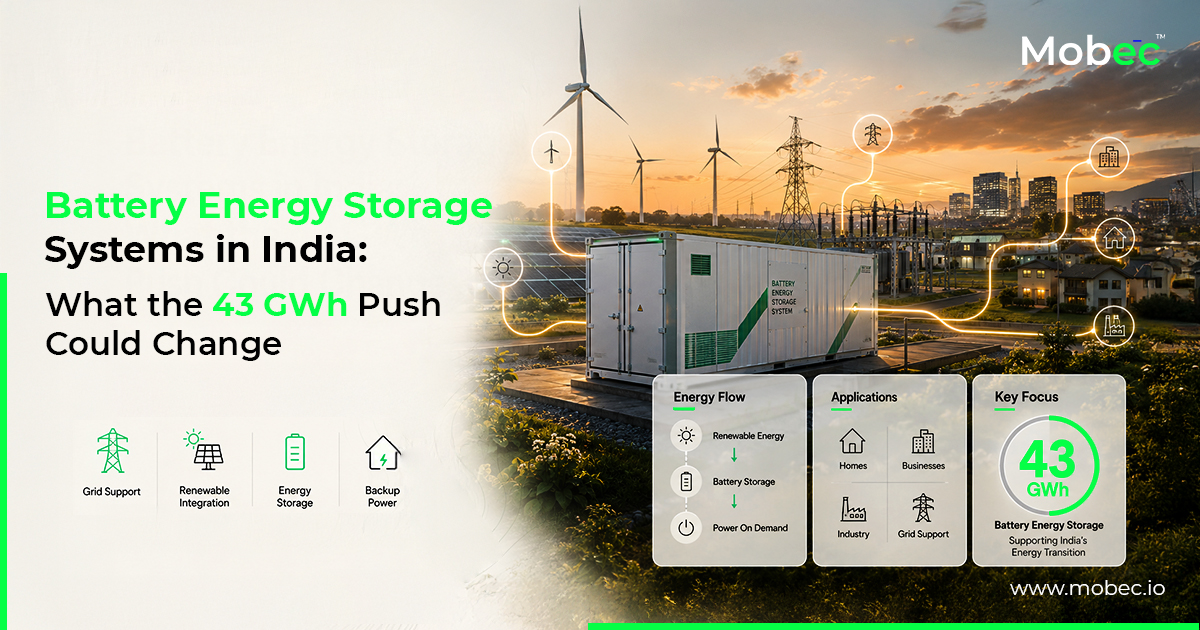
India has spent years expanding renewable electricity generation. The next phase is about making that electricity available when and where it is needed.
The Government of India is implementing two Viability Gap Funding schemes to support approximately 43 GWh of battery energy storage systems. Battery storage is becoming essential energy infrastructure, not simply optional backup.
Much of this capacity will support the grid, but the shift will not stop there. Homes and businesses also need systems that can store electricity from solar or the grid for use during outages or after sunset.
What does India’s BESS target actually mean?
A battery energy storage system, or BESS, stores electricity for later use. At grid scale, it can absorb renewable energy when generation is high and dispatch it when supply falls.
According to a PIB release dated 30 March 2026, India had 798 MWh of existing BESS capacity across projects above 1 MWh.
The two VGF schemes were launched in March 2024 and June 2025. The Ministry also reported 35.8 GWh of BESS capacity under construction.
Why storage is moving closer to the consumer
India’s storage framework has developed through separate measures. A December 2022 amendment recognised ESS as an integral part of the power system. A National Framework followed in September 2023. Another amendment in September 2025 permitted consumers to develop, own, lease or operate energy storage systems.
That widens the market beyond power companies. Businesses can use storage for continuity, while homes with rooftop solar can retain more of the electricity they generate. Facilities with an unstable grid can reduce their dependence on conventional generators.
Known as behind-the-meter storage, these systems give consumers greater control over when electricity is stored and used.
Why compatibility with both solar and the grid matters
An energy storage system becomes more useful when it is not tied to one power source.
With solar panels, a battery can store daytime generation for use at night or during an outage. With a grid connection, the same system can charge when electricity is available and provide backup during a power cut.
In a combined setup, energy can move between solar, the grid and the battery according to availability. This makes storage useful even when a user is not fully off-grid.
How we are bringing energy storage closer to everyday use
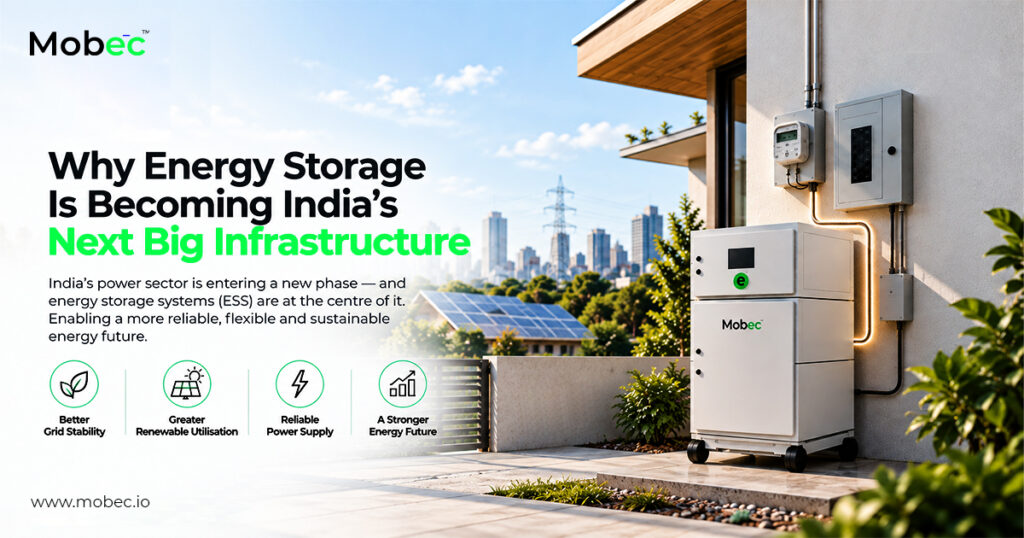
With Homez ESS, we are making energy storage practical for homes and businesses. It works with rooftop solar or the grid and can support backup and off-grid requirements.
With rooftop solar, Homez ESS can store daytime generation for use after sunset. It can also store electricity received from the grid for use during an interruption. Our smart home panel setup supports switchover in as little as 10 milliseconds, helping connected circuits continue with minimal disruption.
Our system provides visibility into battery level, charging and discharging status, solar input and grid parameters. The appropriate configuration depends on the expected load, backup duration and available solar or grid input.
This combination makes Homez ESS suitable for different environments:
- Homes that need reliable backup for essential appliances
- Rooftop-solar users who want to use stored energy after sunset
- Offices and commercial spaces where power interruptions affect work
- Remote or off-grid locations with limited electricity access
- Users looking for a quieter battery-based alternative to fuel-powered backup
From a national target to everyday resilience
India’s approximately 43 GWh push is largely a grid-scale story, but it signals a wider change. Generation alone does not ensure reliability. Storage keeps electricity useful when conditions change.
Grid-scale BESS can balance renewable power, while behind-the-meter systems apply the same principle to homes and businesses. With Homez ESS, we bring solar, grid and battery power together in a system built around everyday energy requirements.
India’s storage future will be built at several scales. Some batteries will support grids. Others will keep homes and workplaces running when power is needed most. At Mobec, our focus is on making that stored energy accessible, adaptable and useful in real operating conditions.
Explore our Homez ESS to find a solar and grid-compatible energy storage configuration for your power requirements.
Frequently asked questions
What is India’s BESS target?
The Government of India is implementing two VGF schemes to support approximately 43 GWh of battery energy storage systems.
Is our Homez ESS compatible with solar and grid power?
Yes. Homez ESS can store electricity received from renewable sources or the grid and can support backup and off-grid applications.
Can Homez ESS provide power during an outage?
Yes. When used with the appropriate smart home panel setup, Homez ESS can provide stored electricity during a grid interruption and support automatic switchover in as little as 10 milliseconds. Actual backup performance depends on the selected configuration and connected load.

Pingback: Why Energy Storage Is Becoming India’s Next Big Infrastructure