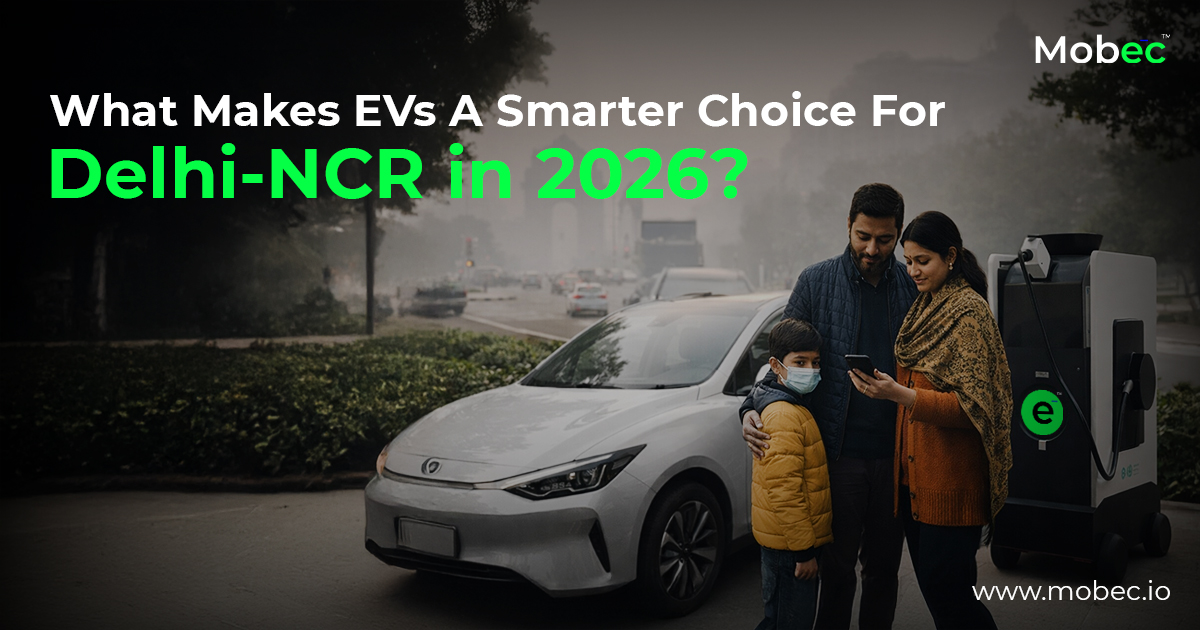
In Delhi-NCR, conversations about AQI levels, winter smog alerts, vehicle restrictions, and mobility rules have become a part of daily life, especially during months when the Air Quality Index often slips into the Very Poor or Severe range. Families check AQI updates before stepping out, businesses keep an eye on GRAP notifications, and many vehicle owners worry whether their cars may fall under future restriction categories.
Over the past few years, changes around BS4 and BS6 norms, periodic restrictions during high-pollution periods, and growing awareness about cleaner mobility have encouraged people to rethink long-term vehicle choices. For many, this has sparked an important question:
Is it worth continuing with older-generation vehicles or is it more practical to gradually move toward EVs and future-ready mobility?
More and more people across Delhi-NCR are realising that shifting to EVs is not just about technology, it is also about peace of mind, stability, and preparedness for the future. According to recent data, EVs made up about 6.7% of new car registrations in Delhi in 2025, marking a significant rise compared with previous years; while this rate still needs to be strengthened, it shows growing interest in electrified mobility and a willingness among buyers to explore greener options.
BS4 to BS6 – Why These Norms Started the Conversation
India’s Bharat Stage norms were introduced to regulate how vehicles operate under environmental standards.
- BS4 vehicles were built using older-generation engines and legacy standards.
- BS6 vehicles are manufactured under stricter rules and upgraded systems, representing a more advanced step in responsible mobility.
Even though several restrictions on BS4 vehicles have eased over time, the uncertainty during high-AQI periods has made many vehicle owners feel the constant pressure of:
“Will my vehicle be affected again?”
This is one of the reasons why many people now prefer moving toward options that feel future-secure and transition-ready, with EVs emerging as a strong, practical alternative.
Why More People in Delhi-NCR Are Gradually Moving Toward EVs
For families, commuters, and businesses, EVs represent:
- Freedom from recurring policy worries linked to evolving fuel-vehicle norms
- Lower operational anxiety during GRAP alerts and seasonal restrictions
- A sense of being part of a positive, future-oriented mobility shift
- A practical step toward healthier neighbourhoods and cleaner surroundings
Rather than being driven only by rules, many people see this move as a long-term lifestyle decision – one that brings stability, predictability, and confidence in an environment where regulations, AQI trends, and travel conditions keep changing.
How Mobec Is Actively Helping People and Businesses Shift to EVs Smoothly
While interest in EVs is growing, many users still worry about day-to-day realities like charging access, reliability, range confidence, and convenience. This is where Mobec plays a meaningful, on-ground role in supporting the transition.
Mobec helps make the shift easier by:
- Setting up home and residential-society charging so families can adopt EVs without dependence on public charging every day
- Providing fleet-ready charging solutions for logistics, delivery, and business mobility, allowing gradual, phase-wise EV upgrades
- Offering portable and on-demand charging assistance, helping new EV users feel confident during early adoption
- Enabling charging installations in offices and commercial hubs, supporting employees and business operations
Instead of the transition feeling uncertain or overwhelming, Mobec helps users experience it as a guided, supported, and practical journey, one where they know they are not shifting alone.
For many people, this brings relief, reassurance, and smoother decision-making, especially in a region where mobility rules and AQI discussions shape everyday choices.
What This Shift Means for Delhi-NCR
- For daily commuters
Fewer worries about sudden mobility disruptions and more confidence in long-term travel plans. - For families
A move toward cleaner mobility options feels like a step toward healthier surroundings and better living comfort, especially during high-pollution months. - For businesses and fleets
Planned EV adoption helps avoid last-minute changes, supports cost-efficiency, and keeps operations future-ready. - For the city as a whole
A gradual, collective shift toward newer technology and EV-ready infrastructure supports a more responsible mobility future.
Conclusion
Delhi-NCR is experiencing a meaningful mobility transition, one shaped by past BS4-to-BS6 shifts, ongoing AQI concerns, and growing awareness about smarter, future-ready vehicle choices. For many people and businesses, moving toward EVs reduces uncertainty, brings long-term stability, and feels like a responsible step toward better urban living.
With easy charging options, practical solutions, and on-ground support, Mobec is helping make the shift to electric mobility smoother, more accessible, and truly beneficial for people across Delhi-NCR.