


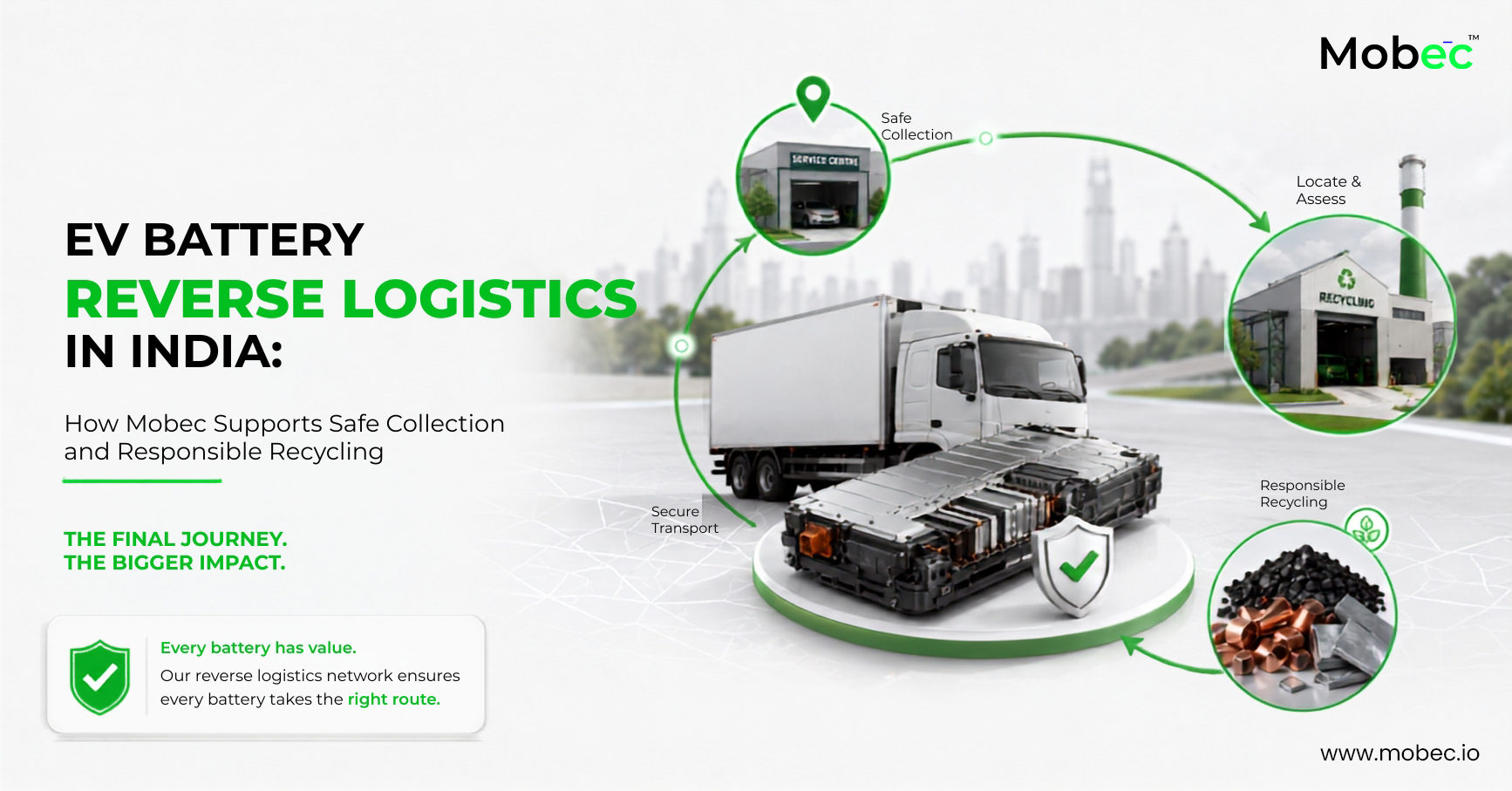
The final journey of an EV battery may be the most important one it makes.
Once a battery can no longer deliver the performance required by an electric vehicle, it does not immediately become useless. It may still hold electrical charge, contain recoverable materials and, in some cases, retain enough capacity for another application.
What happens next determines whether that battery becomes part of India’s circular economy or remains forgotten in a warehouse, service centre or informal scrap channel.
Most conversations about EV battery recycling in India begin inside the recycling facility. In reality, responsible recycling begins much earlier. It starts with locating the battery, assessing its condition and moving it through a safe, documented route. This return journey is known as reverse logistics.
What Is EV Battery Reverse Logistics?
Traditional logistics moves products from manufacturers to customers. Reverse logistics brings used products back from customers, businesses and service networks for repair, reuse, refurbishment or recycling.
For an end-of-life EV battery, this journey may begin at a dealership, fleet depot, workshop, warehouse or battery collection point. From there, the battery needs to be identified, documented, packaged and transported to a suitable facility.
A structured EV battery reverse logistics system generally includes:
- Collection from the battery holder
- Assessment of battery type and condition
- Safe packaging and temporary storage
- Documented transportation
- Sorting for refurbishment, repurposing or recycling
- Responsible material recovery
Without this link, even the most advanced recycling facility cannot recover the materials locked inside a used battery.
Why Is Battery Collection More Complex Than It Appears?
Lithium-ion batteries cannot be handled like ordinary scrap. A retired or damaged battery may still contain electrical energy. Incorrect storage, exposure to heat, physical damage or improper dismantling can increase the risk of short circuits and fire.
The collection process also has to manage batteries of different chemistries, sizes, designs and conditions. A gradually degraded battery from an electric fleet is different from a pack damaged in an accident. Each requires appropriate identification and handling before transportation.
Another challenge is the scattered nature of battery waste. Used batteries may be held by individual EV owners, fleet operators, service centres, manufacturers, electronics companies or local scrap dealers. If there is no clear collection pathway, they may remain unused for months or enter informal recycling channels where safety, documentation and material recovery are difficult to verify.
Reverse logistics brings structure to this fragmented journey.
How Does EPR Support EV Battery Recycling in India?
India’s Battery Waste Management Rules, 2022 introduced an Extended Producer Responsibility framework for managing battery waste. Under EPR, producers are responsible for meeting prescribed obligations related to the collection and recycling of the batteries they place in the market.
The EPR framework connects producers with registered recyclers and creates greater accountability for what happens after a battery completes its useful life. However, compliance cannot exist only through records and certificates. The physical battery must reach a formal recycling system.
Reverse logistics makes this possible by connecting battery holders, producers, collection networks and recyclers.
India is also moving towards clearer identification of batteries within the EPR system. The Battery Waste Management Amendment Rules, 2025 allow producers to display their EPR registration number through a barcode or QR code on the battery, battery pack, equipment or packaging. While this is not a complete battery passport, it supports better identification and regulatory visibility.
What Happens After an EV Battery Is Collected?
Once a used battery reaches a formal facility, it is inspected and sorted according to its chemistry, condition and remaining usability.
A battery with usable capacity may be suitable for refurbishment or repurposing in a second-life application. If it has reached its true end of life, it can move into the recycling process.
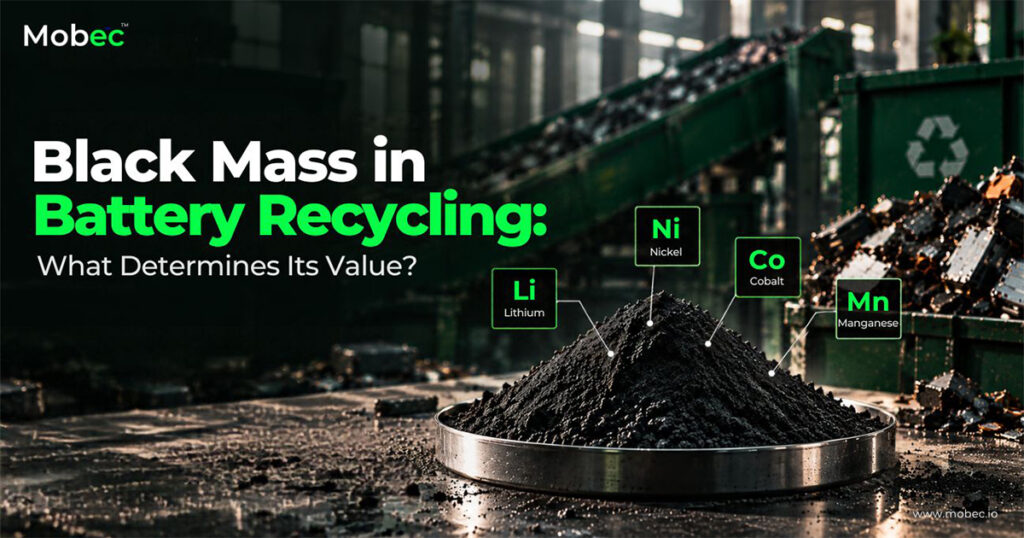
The battery is safely discharged and dismantled before mechanical processing. Materials such as aluminium, copper, steel and plastics can be separated. The active material is processed into black mass, a dark powder that may contain lithium, nickel, cobalt, manganese and graphite.
These materials can then undergo further processing for use in industrial and battery-related applications. What entered the system as battery waste can leave it as a valuable material resource.
How Mobec Connects Collection with Responsible Recycling
At Mobec, we work across the lithium-ion battery recycling chain, beginning with structured collection and transportation of end-of-life batteries. Our wider battery-lifecycle capabilities include refurbishment, repurposing and recycling. Batteries entering our recycling process undergo sorting, controlled processing, material separation and black mass production. Our solutions are designed for battery producers, EV manufacturers, fleet operators, electronics companies and other organisations managing lithium-ion battery waste.
Through material recovery, we help bring lithium, nickel, cobalt, manganese, graphite, copper and aluminium back into productive use. This helps prevent valuable resources from being lost and supports a more circular battery supply chain in India.
The Road Back Is Part of the Solution
India’s circular battery ecosystem depends on more than recycling capacity. It requires a reliable pathway that brings used batteries back into the formal value chain.
By strengthening collection, safe transportation and documented processing, reverse logistics supports responsible battery management while ensuring valuable materials are not lost.
At Mobec, we support this journey from collection to material recovery, helping end-of-life batteries move responsibly towards their next useful role.

Pingback: More EVs, More Batteries: Why India Needs a Stronger Battery Recycling Ecosystem